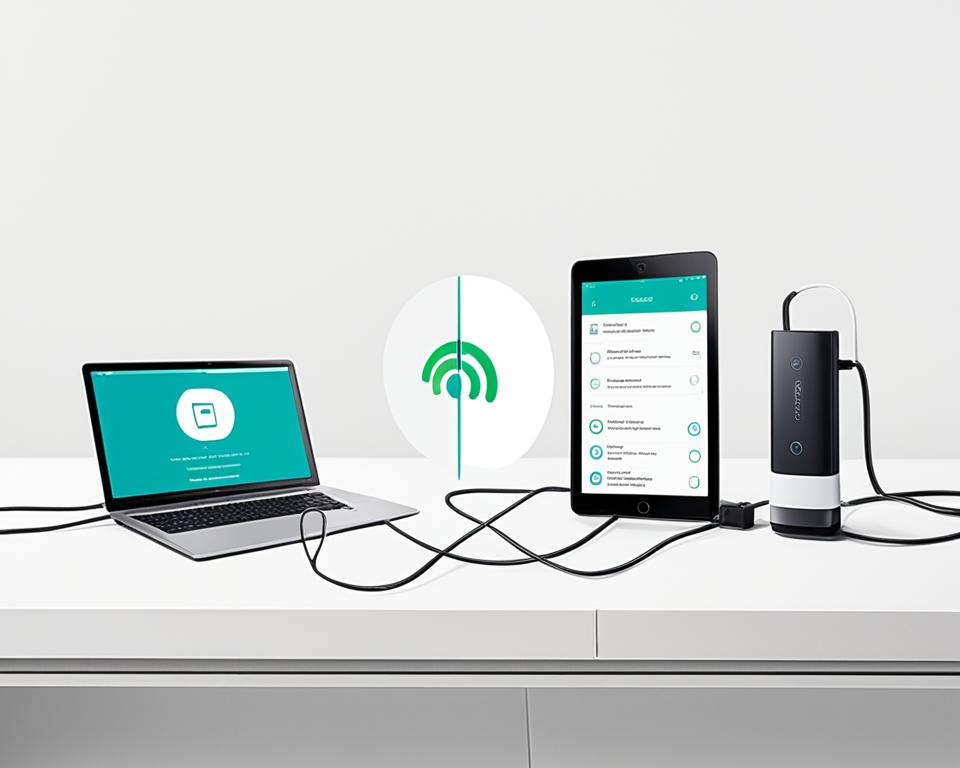
The debate between wireless and wired connectivity is ongoing in our digital world. As technology gets better, choosing between these two is more important for everyone. Whether you’re setting up a home network, outfitting your office, or looking for the best for your digital life, knowing the pros and cons of wireless vs. wired matters.
This detailed article will look into wireless and wired networks. We’ll cover the main factors that affect your choice. From the freedom of wireless to the reliability and security of wired connections, we’ll discuss everything. So, get ready to find out which option is best for you.
The Eternal Debate: Wireless or Wired?
The debate between wireless and wired networks has been ongoing for a long time. Both have their own benefits, and the right choice depends on what you need and like. Let’s look at the good and bad of each option.
Unpacking the Pros and Cons
Wireless connections let you move around without being tied down. You can access the internet and your devices from anywhere within range. This is great for people who work remotely or have trouble with wired setups.
But, wireless networks can have issues like signal loss, slower speeds, and security risks. Wired networks are often more reliable and perform better, especially for important tasks or places that need steady internet.
| Wireless | Wired |
|---|---|
| Mobility and flexibility | Reliable and consistent performance |
| Potential signal interference | Physical limitations and constraints |
| Security concerns | Secure and hardwired connections |
| Susceptible to environmental factors | Immune to environmental interference |
Choosing between wireless vs. wired networks depends on what you need. Think about how much you move, the importance of your tasks, and how secure you want to be. This will help you pick the best option for your network comparison and make sure you get the best performance.
“Connectivity is the new currency of business, and the choice between wireless and wired networks has far-reaching implications for productivity, security, and the future-readiness of your organization.”
Cutting the Cord: The Allure of Wireless
In today’s digital world, wireless advantages are more and more obvious. They offer a new way to connect without the hassle of wires. No more dealing with tangled cords or searching for the right cable length.
Wireless networks have changed how we use our devices. They give us flexibility and mobility we couldn’t imagine before. This means we can move around freely without losing our connection.
One big plus of wireless advantages is how convenient it is. You don’t have to stay in one spot. You can easily switch between devices in different rooms or even buildings without any trouble. This makes using devices more natural and smooth.
- Eliminate the clutter of cables and cords
- Enjoy uninterrupted access to your devices, no matter where you are
- Easily connect multiple gadgets without the hassle of physical connections
Wireless advantages are not just for personal use. They also help in the workplace. Wireless tech makes it easier to work together and talk with others. Teams can share ideas and meet up without being in the same room, making work more dynamic.
“Wireless networks have become the backbone of modern connectivity, empowering us to work, play, and explore with unprecedented freedom.”
The appeal of wireless advantages is strong for both people and businesses. It offers more freedom, better teamwork, and a cleaner space. The wireless revolution is still growing and changing how we live and work.
Wireless: The Seamless Solution for Mobility
In today’s fast-paced world, wireless networks are a big plus. They let you move around without being stuck in one spot. This is great for remote workers, digital nomads, or anyone who likes to be free to move.
Untethered Freedom at Your Fingertips
Wireless networks mean no more cables. You can work, stream, and check info from anywhere. Whether you’re in a coffee shop, a park, or on the move, your digital life goes with you.
The benefits of wireless go beyond just being convenient. They open up new ways to work and be productive. You can work with your team in real-time, no matter where you are. Or stream your favorite shows on a long flight. Wireless lets you stay connected and productive, wherever you go.
| Wireless Advantages | Wired Advantages |
|---|---|
| Mobility and flexibility | Stable and reliable connections |
| Easy setup and installation | Higher data transfer speeds |
| Eliminates the need for cables | Greater security and privacy |
| Supports multiple devices simultaneously | Consistent performance without interference |
The benefits of wireless are clear as we move forward. They offer a smooth way to stay flexible and free in our work and leisure.
“Wireless connectivity empowers you to stay connected and productive, no matter where your day takes you.”
The Wired Realm: Stability and Speed
Wired connections are unmatched in stability and performance. They are the top choice for those needing a reliable network. Let’s look at why wired networks are preferred for stable and high-performance connections.
Reliable Connections, Uncompromised Performance
Wired networks give you a steady and stable connection. This means your data and online activities won’t be interrupted. Unlike wireless signals, which can be affected by interference, wired connections provide a direct path for your data. This results in top-notch performance, even when many devices are online.
Wired networks also have higher bandwidth and faster data transfer speeds than wireless ones. This makes them perfect for tasks like high-definition video streaming, large file uploads, or demanding gaming sessions. The network comparison shows wired connections are more powerful and reliable.
“Wired networks are the backbone of stable and high-speed internet connectivity, ensuring that your digital experiences are never compromised.”
For both small home offices and large enterprises, wired networks offer clear advantages. They provide stability and fast data transfer. This makes them essential in today’s digital world for those who want the best.
Wireless Security: Keeping Your Data Safe
Wireless networks bring us convenience but also raise security concerns. They can be seen as more open to cyber threats. But, the security world has changed. Now, wireless tech uses strong measures to protect your data.
One big worry is unauthorized access. This means someone could tap into your network or see your private info. To fight this, wireless tech uses strong encryption like WPA2. This keeps your data safe from prying eyes and thieves.
- Wireless encryption protocols like WPA2 ensure secure data transmission over wireless networks.
- Network authentication mechanisms, such as password-protected access points, help control who can connect to the wireless network.
- Firewalls and intrusion detection systems further bolster the security of wireless networks, monitoring for and preventing potential threats.
Wi-Fi Protected Setup (WPS) has made it easier to connect devices safely. It lowers the chance of setting up your network wrong or making it too easy to get in.
| Wireless Security Feature | Description |
|---|---|
| Encryption | Ensures secure data transmission over wireless networks using protocols like WPA2. |
| Authentication | Restricts access to authorized users through password-protected access points. |
| Firewalls and Intrusion Detection | Monitors and prevents potential threats to the wireless network. |
| Wi-Fi Protected Setup (WPS) | Simplifies the process of securely connecting devices to the wireless network. |
No network is completely safe from threats, but wireless security has gotten better. By using these new tech, you can enjoy wireless networks safely. Your data stays protected.
Wired Networks: The Fortress of Cyber Defense
Wired networks are often the top choice for protecting your digital stuff. They offer a strong physical barrier that gives you an extra layer of wired security. This part will look at how wired networks can keep your data safe from threats.
Hardwired Protection for Your Digital Fortress
Wired networks are tough to break into because they need a physical link to the network. This makes them less likely to be hacked compared to wireless networks. It’s harder for cybercriminals to get into your system this way.
Also, wired networks are more reliable and stable. This is key when you need constant access to important data, like in finance or healthcare.
| Feature | Wired Networks | Wireless Networks |
|---|---|---|
| Security | Physically Secure, Harder to Hack | Vulnerable to Interception |
| Reliability | Stable, Consistent Connections | Susceptible to Interference and Dropouts |
| Speed | Faster Data Transfer Rates | Potentially Slower Speeds |
| Maintenance | Easier to Manage and Monitor | Require More Maintenance and Troubleshooting |
Wireless networks are great for convenience, but wired networks offer better wired security and stability. They’re a smart choice for anyone who values protecting their digital stuff. In today’s world of cyber threats, wired networks can be a strong shield for your data and digital setup.
Wireless: Seamless Connectivity Across Devices
Our digital lives are now linked to many devices. From smartphones and tablets to smart home gadgets and wearables, we need wireless advantages more than ever. These devices work together smoothly, thanks to wireless networks. This has changed how we live, work, and have fun.
The Harmonious Dance of Gadgets
Picture a world where your devices talk to each other without a hitch. They share info, sync up, and control your smart home with just a touch. Wireless advantages like more freedom, better work, and a smoother experience have made this possible. Wireless tech has changed the game by making our devices work together seamlessly.
- Seamless file sharing and data syncing between your smartphone, laptop, and tablet.
- Easy control of your smart home devices, like setting the thermostat or turning on lights.
- Streaming music, movies, and videos without pause across different devices for a unified entertainment experience.
The way we use technology has changed thanks to wireless advantages. Our devices work together better, making our digital lives more connected and efficient. With wireless tech, the future of our digital lives is looking very bright.
The Cost Conundrum: Wireless vs. Wired
When looking at network connections, the cost is key. Wireless and wired networks have different costs. Let’s look at the costs of each and what affects your choice.
Setting up a wireless network might cost more at first. You’ll need to buy routers, access points, and adapters for each device. But, setting it up is easier and quicker, which might make up for the cost. Wired networks need lots of cables, which can be expensive, especially in big areas or old buildings.
| Cost Factor | Wireless Network | Wired Network |
|---|---|---|
| Initial Setup | Higher due to wireless equipment | Lower, but requires extensive cabling |
| Ongoing Maintenance | Lower, with fewer physical components to maintain | Higher, with regular cable and port checks |
| Scalability | Easier to expand, add new devices | More complex to add new wired connections |
| Energy Consumption | Lower, as wireless devices use less power | Higher, as wired networks require more energy-intensive components |
Over time, wireless networks might be cheaper because they’re easier to maintain and expand. They also use less power, which can lower your bills. But, for some needs like high-speed or critical operations, wired networks might be worth the cost upfront.
The choice between wireless vs. wired cost depends on your specific needs. Think about how you use your network, your plans for the future, and your budget. This will help you decide what’s best for you.
Future-Proofing Your Setup: Scalability Matters
The digital world is always changing, making it crucial to scale your network. As we use technology more, our communication systems need to grow too. Wireless and wired networks have their own strengths for handling these demands. Knowing how they can grow is vital for a future-proof setup.
Preparing for Tomorrow’s Digital Demands
Technology keeps evolving with new devices and apps that need more bandwidth. Network scalability shows how well a network can adapt to these changes. Wireless networks are great at expanding easily, letting you add more devices without a hitch.
Wired networks are known for being stable and reliable. But, they might struggle to grow as your space does. Adding more wired connections can get complicated and expensive.
| Feature | Wireless Networks | Wired Networks |
|---|---|---|
| Scalability | Highly scalable, with the ability to easily add new devices and connections | Can be more challenging to scale as physical infrastructure requirements increase |
| Bandwidth Capacity | Continually improving with advancements in wireless technology | Offers consistent, high-bandwidth performance, but may require upgrades to maintain pace with evolving needs |
| Flexibility | Allows for seamless mobility and adaptability to changing usage patterns | Typically more rigid, with fixed access points and cabling |
When comparing wireless and wired networks, you can choose wisely for your digital future. This choice helps you stay ahead with technology’s changes.

Wireless: The Green Choice for Eco-Conscious Users
In today’s world, choosing between wireless and wired networks is more about being eco-friendly. The wireless revolution is leading the way in sustainability. It cuts down on the need for cables and energy-drinking devices, making our future greener and more efficient.
Now, we don’t have to deal with cables getting tangled or devices using a lot of power. Wireless tech has brought us a new era of easy and energy-saving connections. It needs less hardware and can use renewable energy, making it the top pick for those who care about the planet.
The wireless movement isn’t just about networks. It’s also about devices that are easy to carry and use, which helps us use less energy. This means lower energy bills, smaller carbon footprints, and a more eco-friendly digital world. As we aim for a greener future, wireless tech is key in helping us protect our environment.